
Mandibular Reshaping: Precision, Safety, and Natural Results

Mandibular reshaping has emerged as a key structural procedure in modern aesthetic medicine. Beyond cosmetic improvement, restoring the mandibular line represents a strategy aimed at reestablishing the anatomical framework of the lower third of the face.
Age-related mandibular bone remodeling, soft tissue descent, ligamentous laxity, and dermal matrix degradation contribute to the progressive loss of definition of the mandibular line. Contemporary high-elasticity dermal fillers allow the clinician to restore projection and support through precise supraperiosteal placement, achieving natural and harmonious results [1–4].
The definition of the mandibular line plays a fundamental role in facial harmony, in the perception of youthfulness and in the proportional balance between the middle and lower third of the face. The attenuation of the mandibular angle and jawline represents one of the earliest and most visible signs of facial aging. Modern injection techniques allow for a structural restoration rather than a simple superficial correction, placing mandibular reshaping as a central component of lower third rejuvenation protocols [5].
Anatomical Basis of Mandibular Definition
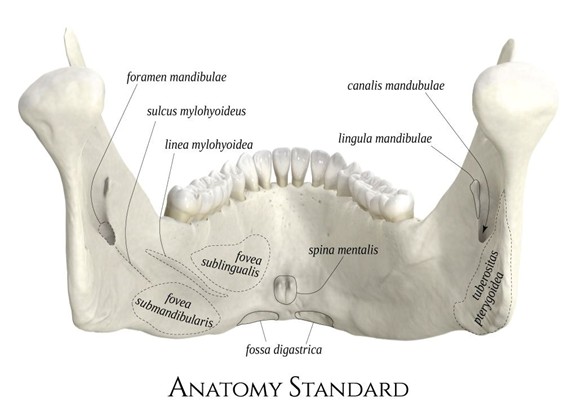
The mandible represents the architectural scaffold of the lower third of the face. Major anatomical landmarks include the gonial angle, the mandibular body, the ramus, and the mentonus. Age-related bone resorption results in a reduction in lateral projection and an alteration in soft tissue support. The concomitant descent of the superficial and deep fat compartments, together with the attenuation of the retaining ligaments, contributes to the loss of clarity of the cervicomandibular contour and definition [1,2,4].
Pathophysiology of Jawline Aging
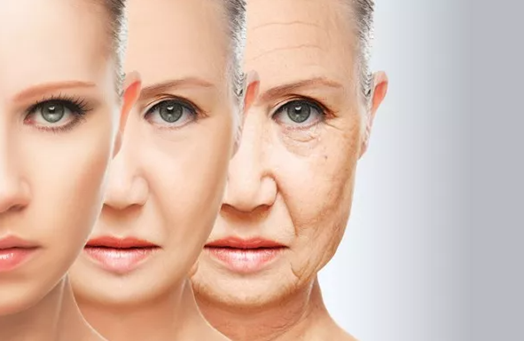
Mandibular aging is multifactorial. Bony remodeling results in a posterior and inferior shift of the mandibular framework. Collagen and elastin degradation reduces dermal firmness, while soft tissue ptosis attenuates the mandibular margin. These combined mechanisms alter the facial silhouette and contribute to a prematurely aged appearance [3].
Gender-Specific Anatomical Considerations

Sexual dimorphism of the mandible requires individualized treatment planning. Female mandibular anatomy typically features softer angles and curvilinear transitions, requiring subtle refinement. Male mandibles exhibit sharper gonial angles and greater lateral projection; in these cases, treatment aims to strengthen structural definition without compromising overall harmony [9].
Rheological Requirements of Dermal Fillers
Effective mandibular reshaping requires fillers with a high elastic modulus (G'), strong cohesiveness, and excellent tissue integration. These properties allow for shape retention under dynamic stress and ensure adequate support capacity when the product is placed supraperiosteally along the mandibular margin [7,8,10].
Injection Plans and Safety Considerations
Safe practice relies on deep supraperiosteal or sub-SMAS placement, accurate identification of vascular structures such as the facial artery and submental artery, and the controlled use of bolus or linear retrograde injection techniques. Anatomical knowledge is essential to minimize complications and optimize outcomes [6,12].
Clinical Results

When performed correctly, mandibular reshaping restores definition to the mandibular line, improves the tone of the lower third of the face, enhances the cervicomandibular angle, and rebalances facial proportions. The results appear natural and structurally coherent, with no evidence of overcorrection [11,13].
Conclusions
Mandibular reshaping should be considered a structural anti-aging intervention rather than a simple cosmetic procedure. Anatomical precision, appropriate product selection, and strict adherence to safety protocols are essential to achieving predictable and natural-looking results in rejuvenating the lower third of the face.
Bibliography
- Mendelson, B., & Wong, C. H. (2012). Changes in the facial skeleton with aging. Aesthetic Plastic Surgery.
- Lambros, V. (2007). Observations on periorbital and midface aging. Plastic and Reconstructive Surgery.
- Pessa, J. E., & Chen, Y. (2002). Curve analysis of the aging orbital aperture. Plastic and Reconstructive Surgery.
- Rohrich, R. J., Pessa, J. E., & Ristow, B. (2008). The youthful cheek and the deep medial fat compartment. PRS.
- Ghassemi, A., Prescher, A., & Riediger, D. (2003). Anatomy of the SMAS revisited. PRS.
- Beleznay, K., et al. (2015). Avoiding and treating blindness from fillers. Dermatologic Surgery.
- Sundaram, H., et al. (2010). Rheological properties of soft tissue fillers. Dermatologic Surgery.
- Kablik, J., et al. (2009). Comparative physical properties of hyaluronic acid dermal fillers. Dermatologic Surgery.
- Goodman, G. J., & Clague, M. D. (2017). Anatomy of the jawline for injectable treatments. Journal of Cosmetic Dermatology.
- Braz, A. V., & Sakuma, T. H. (2017). Biomechanics of hyaluronic acid fillers. Surgical & Cosmetic Dermatology.
- de Maio, M., & Rzany, B. (2014). Injectable Fillers in Aesthetic Medicine. Springer.
- Cotofana, S., et al. (2016). Anatomy of the facial artery in relation to fillers. PRS.
Moradi, A., et al. (2019). Structural volumization of the lower face. Aesthetic Surgery Journal.”